Sunday, January 27, 2019

Light Invisible

It is very humbling to contemplate the electromagnetic spectrum and the tiny sliver that encompasses the full range of colors we can perceive:


For his Chemistry Lab, Ken Costello considered this to mean that in terms of the full spectrum we are indeed... 


spectrum
"The entire light spectrum (also known as the electromagnetic spectrum) spans light waves that are miles long to waves that are extremely short. The light we see (visible light) only spans about 1.5% of the entire light spectrum. So we would be legally blind considering what we could see." Experiment 7: Light as a Tool

To clarify the extent of this blindness, Ken Costello compared full spectrum perception to the color picture of a mountain scene (left) and then removed all but 1.5 percent of the color (right) to emphasize the 1.5 percent of the electromagnetic spectrum that we can actually perceive:


Clearly we are missing a lot and it is only by using powerful scientific instruments that we can find out what we are indeed missing.  The spectrum below displays the uses to which we put various wavelengths of the electromagnetic spectrum


For more on the above illustration, take the NASA Science:

Tour of the Electromagnetic Spectrum

Introduction:


Radio Waves:


Microwaves:


Infrared Waves:


Visible Light Waves:


Ultraviolet Waves:


X-Rays


Gamma Rays


But even though we humans are restricted to our narrow range of visible light, some animals are not! 


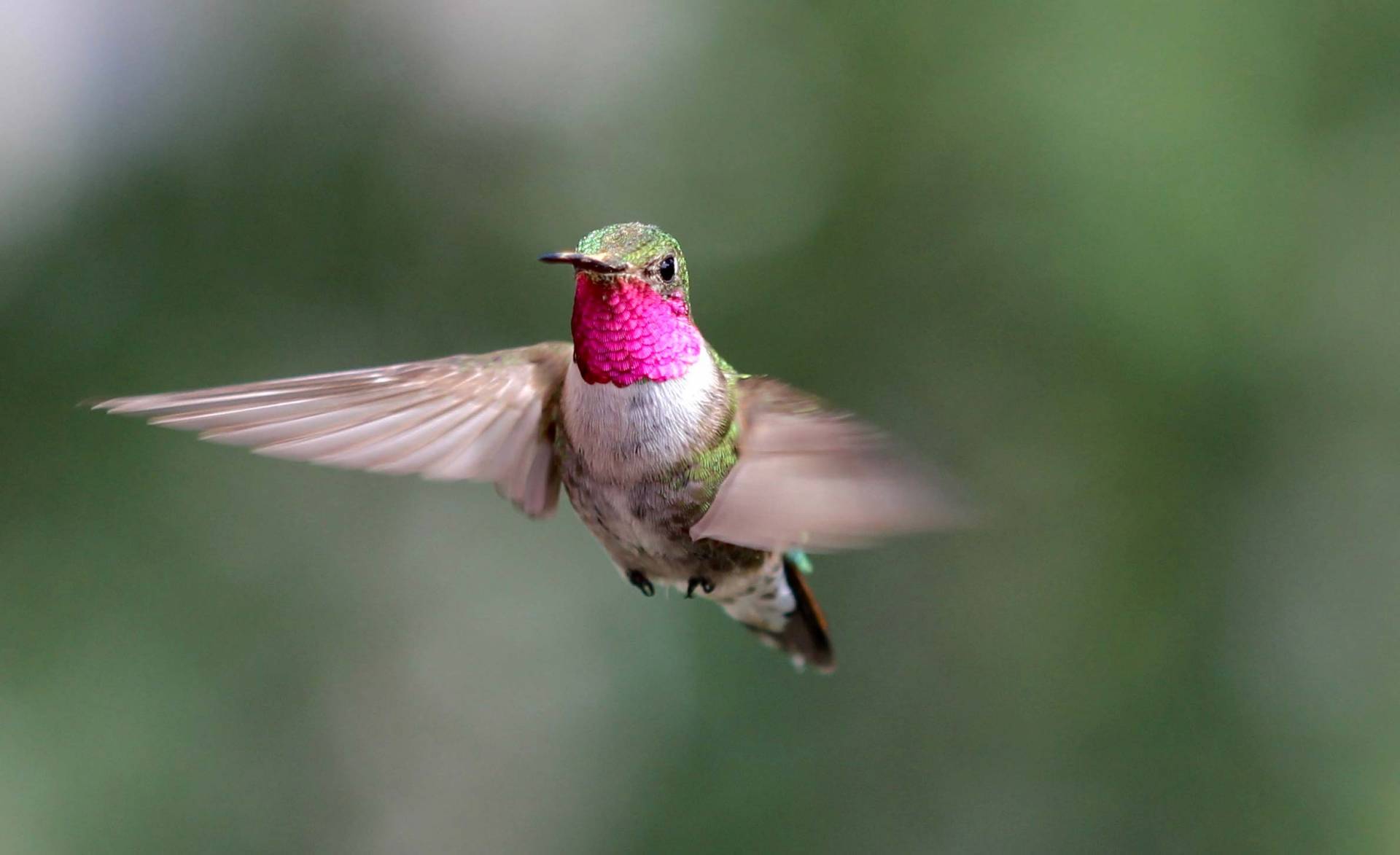
Spectacular bird's-eye view? Compared to hummingbirds, humans are color blind!


Wild hummingbirds see a broad range of colors humans can only imagine 
 

ScienceAlert Article:

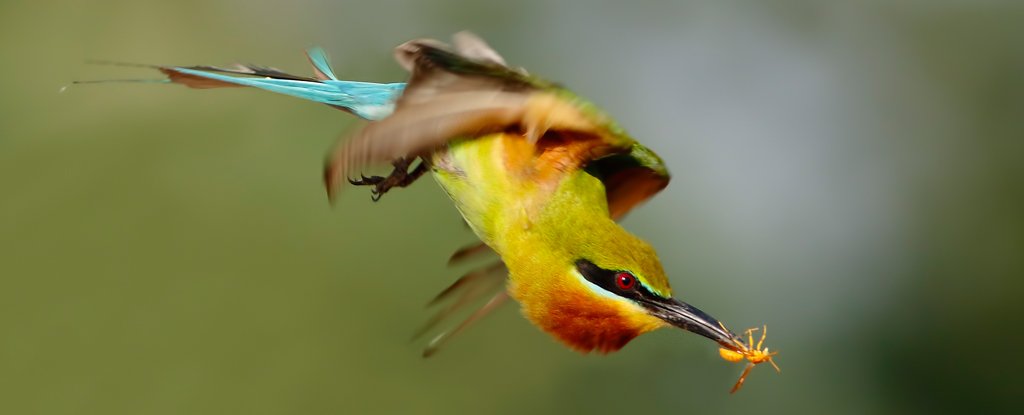
Birds Can See a 'Colour' Humans Can't.  Now Scientists Have Revealed This Hidden World.
The full text of the research paper by Cynthia Tedore and Dan-Eric Nilsson of the Zoological Institute, University of Hamburg:

Avian UV vision enhances leaf surface contrasts in forest environments
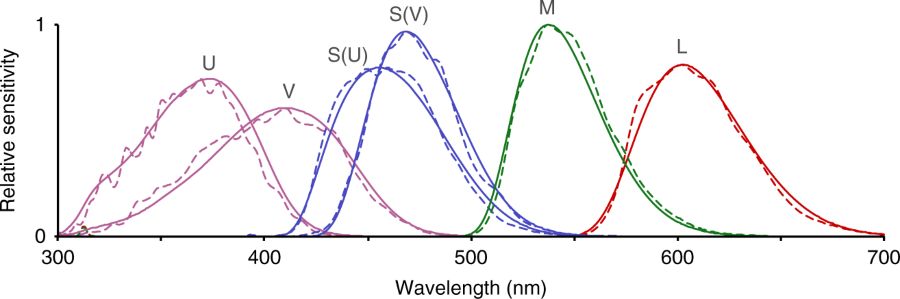
 
Spectral sensitivities of avian cones and multispectral camera channels. Solid lines show spectral sensitivities of avian cones and dashed lines show multispectral camera channels. Most terrestrially foraging birds are tetrachromats, having L, M, and either S(U) and U or S(V) and V cones6. L, M, S, V, and U stand for Long, Medium, Short, Violet, and Ultraviolet wavelengths, respectively


Monday, January 21, 2019

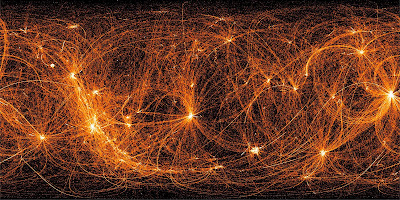
Observatable Universe in a Single Image


ScienceAlert Article: 
Here's What It Looks Like 

Created by musician and artist Pablo Carlos Budassi, there is lots more information available in his Blog:


  The entire observable Universe can be featured because the distance scale diminishes exponentially the further you go out from the Earth according to the following scale:


This scale is featured on the version of the illustration that features helpful labels:


Further information on the logarithmic projection for maps is provided by Philippe Rivière including an interactive sample projection centered on Iceland which can be observed as variables are altered:

As we look further and further away we also look further and further back in time since light although fast, does take time to travel long distances.   NASA scientist James O'Donoghue created some animations to help visualize the speed of light:

First, light is able to travel 7.5 laps around the Earth every second:


Next we see how long it takes light to go from the Earth to the Moon:


Finally we see how slowly light travels the greater distance from Earth to Mars:


Monday, July 30, 2018

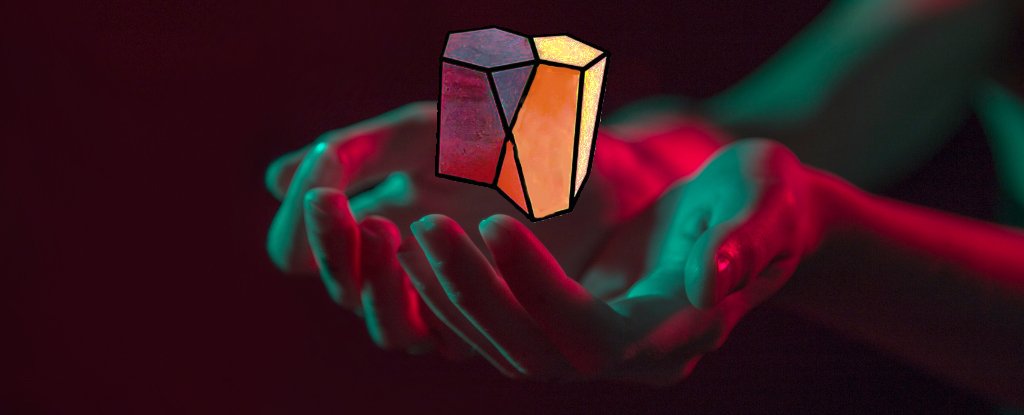
Scientists have discovered an entirely new shape and it is all over you!

It turns out that your skin cells employ a shape previously unknown to both biologists and mathematicians...


Science Alert: Scientists Have Discovered an Entirely New Shape, And It Was Hiding in Your Cells


Gizmodo: The 'Scutoid' Is Geometry's Newest Shape, and It Could Be All Over Your Body


The original research article: 

Scutoids are a geometrical solution to three-dimensional packing of epithelia

The 'scutoid' shape (d) was named in homage to the scutellum 
 – a posterior portion of the thorax in some insects, which resembles the same mini-triangle shape (e)...  

Thursday, May 3, 2018

Paradoxical Arrow of Kokichi Sugihara

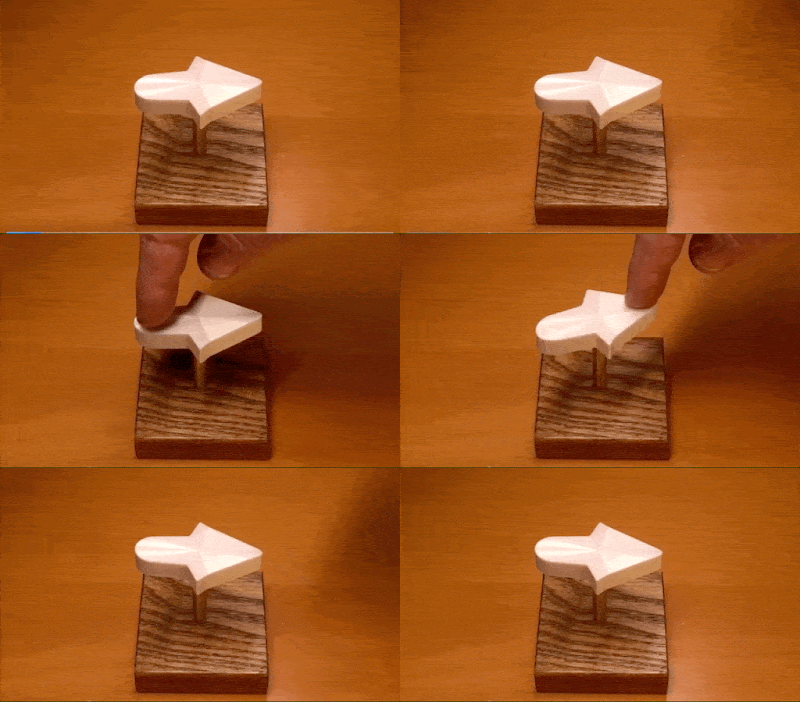
The Japanese mathematican Kokichi Sugihara has developed this 3D Arrow model:


You can can get some idea of what's going on here when he picks it up and shows it from above:


ScienceAlert Article on Kokichi Sugihara:

This 3D Optical Illusion Will Make You Question The Shape of Reality  

More 3D Illusions by Kokichi Sugihara:


Many other fascinating illusions can be viewed at the...

Best Illusions of the Year Website 


Creative Sam's Video of the 7 Best Optical Illusions of All Time...


Including the Train Illusion which is somewhat like the dancer that spins two ways...


Tuesday, April 17, 2018

Strangest Optical Illusions Known to Science


The eye is not merely a window on the world, but a camera and the mind does a lot of processing to produce the world as we see it.  To illustrate this idea, MICHELLE STARR at ScienceAlert has compiled a great set of mindbending optical illusions:


Here are the pictures mentioned and further information on each one:

The Dress - Do you see white and gold or blue and gold?


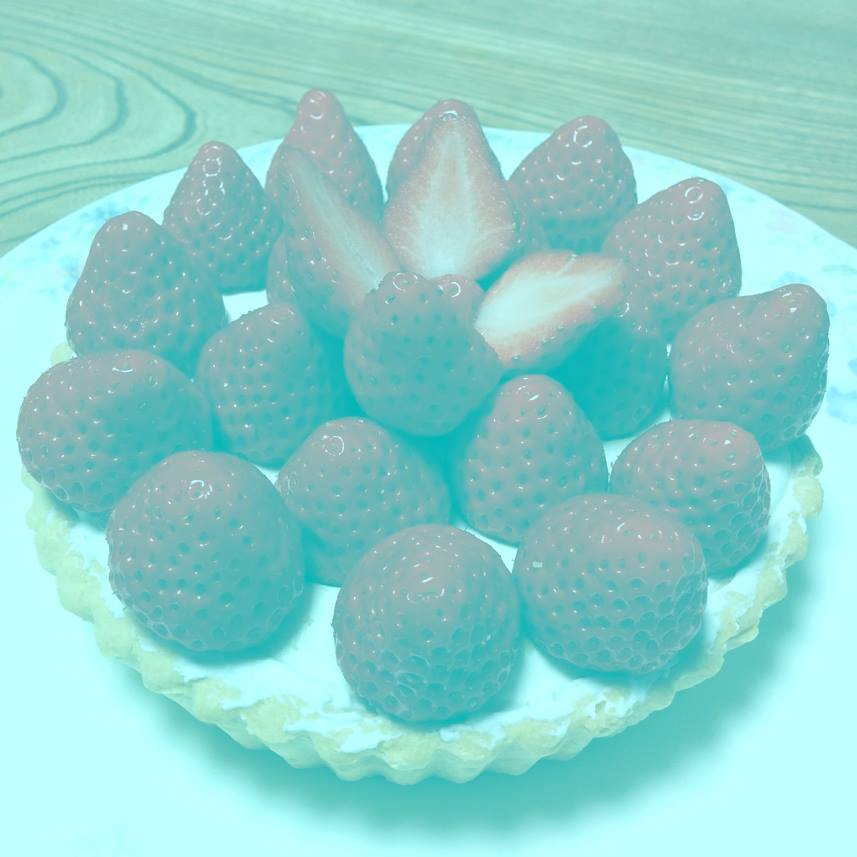
The Non-Red Strawberries


The cafe wall illusion


 The Illusion Index site also provides information on many other illusions.


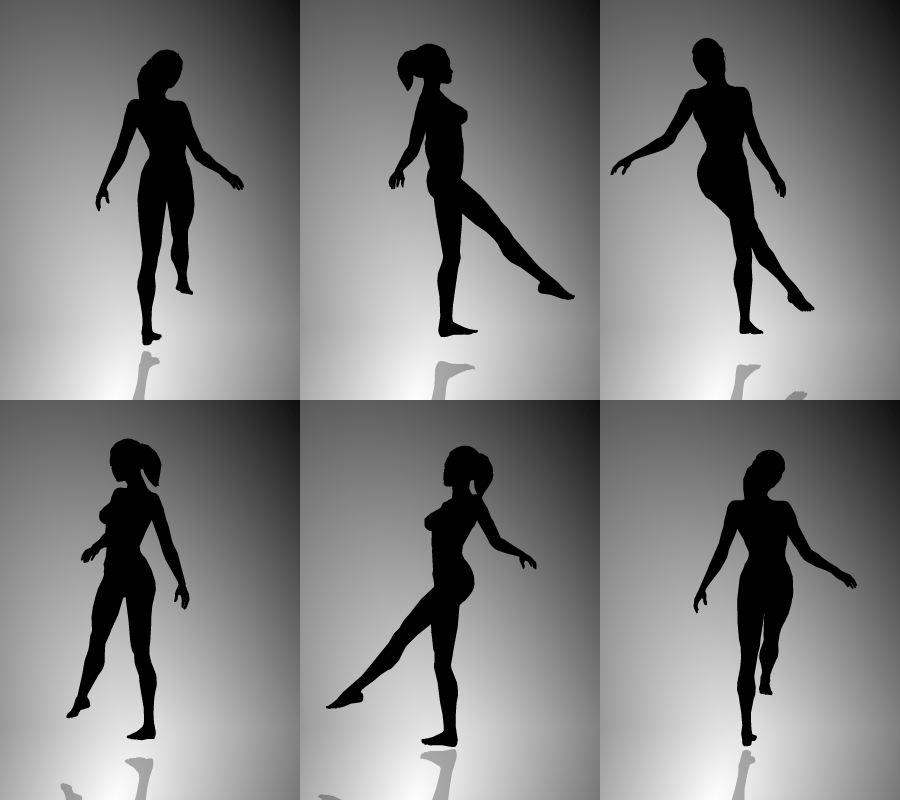
Curvature blindness illusion


Original Article by the discoverer:

Ragu Kattinakere: Spinning Lady Illusion Explained


The Dancing Black Dots


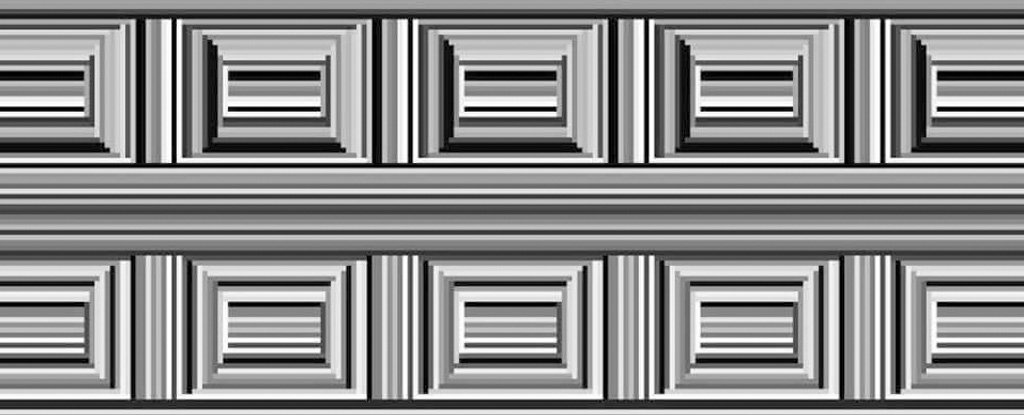
Ninio's Extinction Illusion 

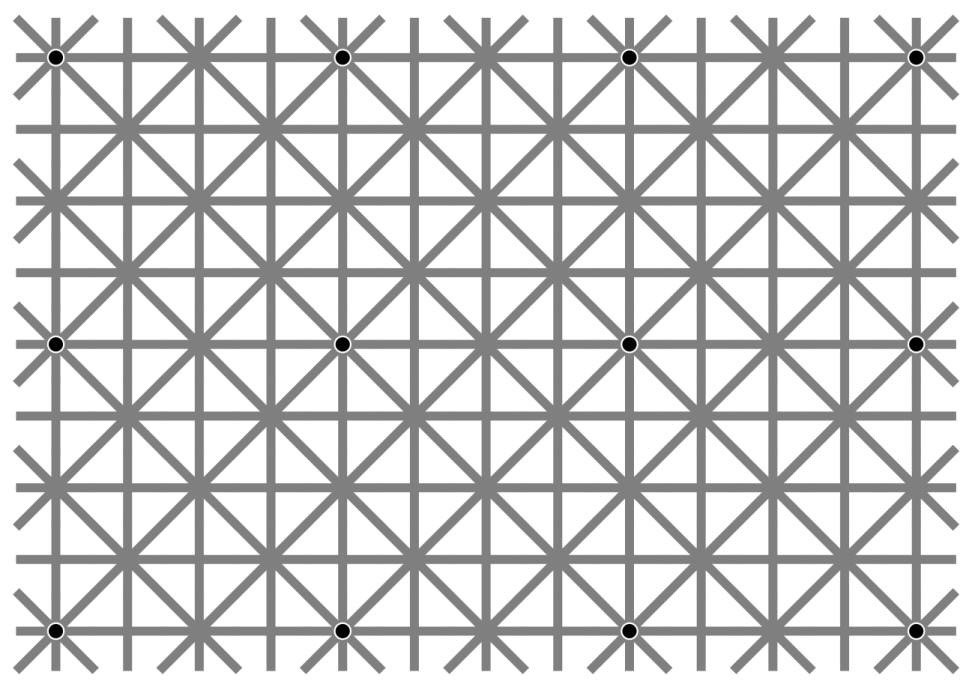
Here's why you can't see all twelve black dots 
in this optical illusion 


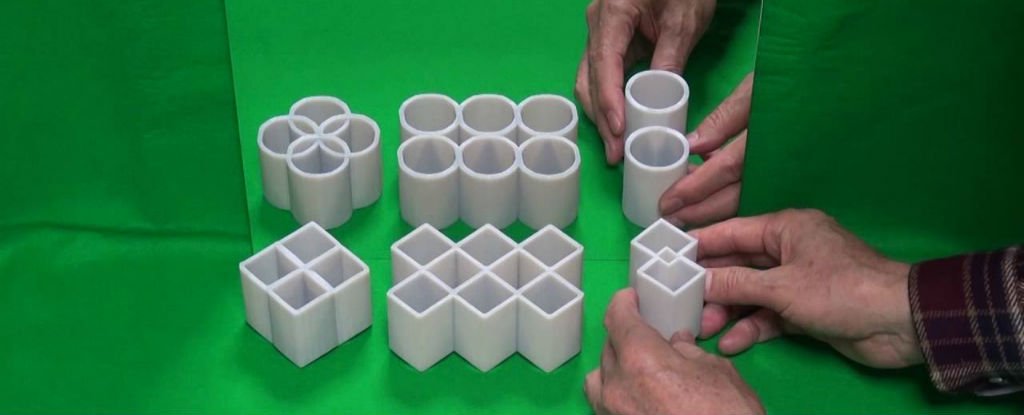
 The Ambiguous Cylinder Illusion


Ambiguous Cylinder Illusion:  How it Works


Wednesday, February 7, 2018

Street Picture Optical Illusion

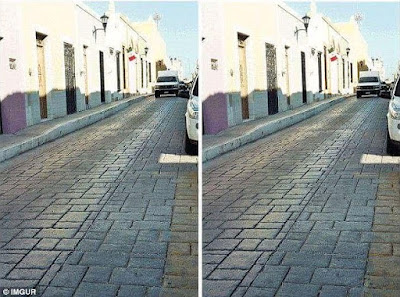
Two identical street pictures placed side by side suddenly become two different perspectives:


The Daily Mail prepared a short video to show these are indeed exactly the same picture:


The informative Daily Mail article goes on to compare this to the famous cafe wall optical illusion where horizontal lines appear to taper or bend:


Michael Bach has a fascinating and informative page on the cafe wall illusion:


This page is part of Michael Bach's excellent compendium of visual illusions which is well worth exploring: 


 This illusion is yet another good reminder that the eye is not merely a window.  What we are seeing is in fact a projection within our brains which is influenced by the way our brains work... 

Optical illusions show how we see | Beau Lotto


Why can't our extremely complex eyes render simple optical illusions? Surprise, surprise -- it comes back to the brain, which has only evolved to encounter natural stimuli.

Why do we see illusions? - Mark Changizi


Fearful Symmetry Triptych

While grappling with the works of William Blake and his foremost literary interpreter, Northrop Frye in his book Fearful Symmetry , I c...